Pages

Monday, June 14, 2010

Valles Caldera and Jemez Mountains

When my plane landed in Albuquerque on Friday it was 102 degrees. I made a quick stop at Petroglyph National Monument and saw some really cool carvings. http://www.nps.gov/petr/index.htm
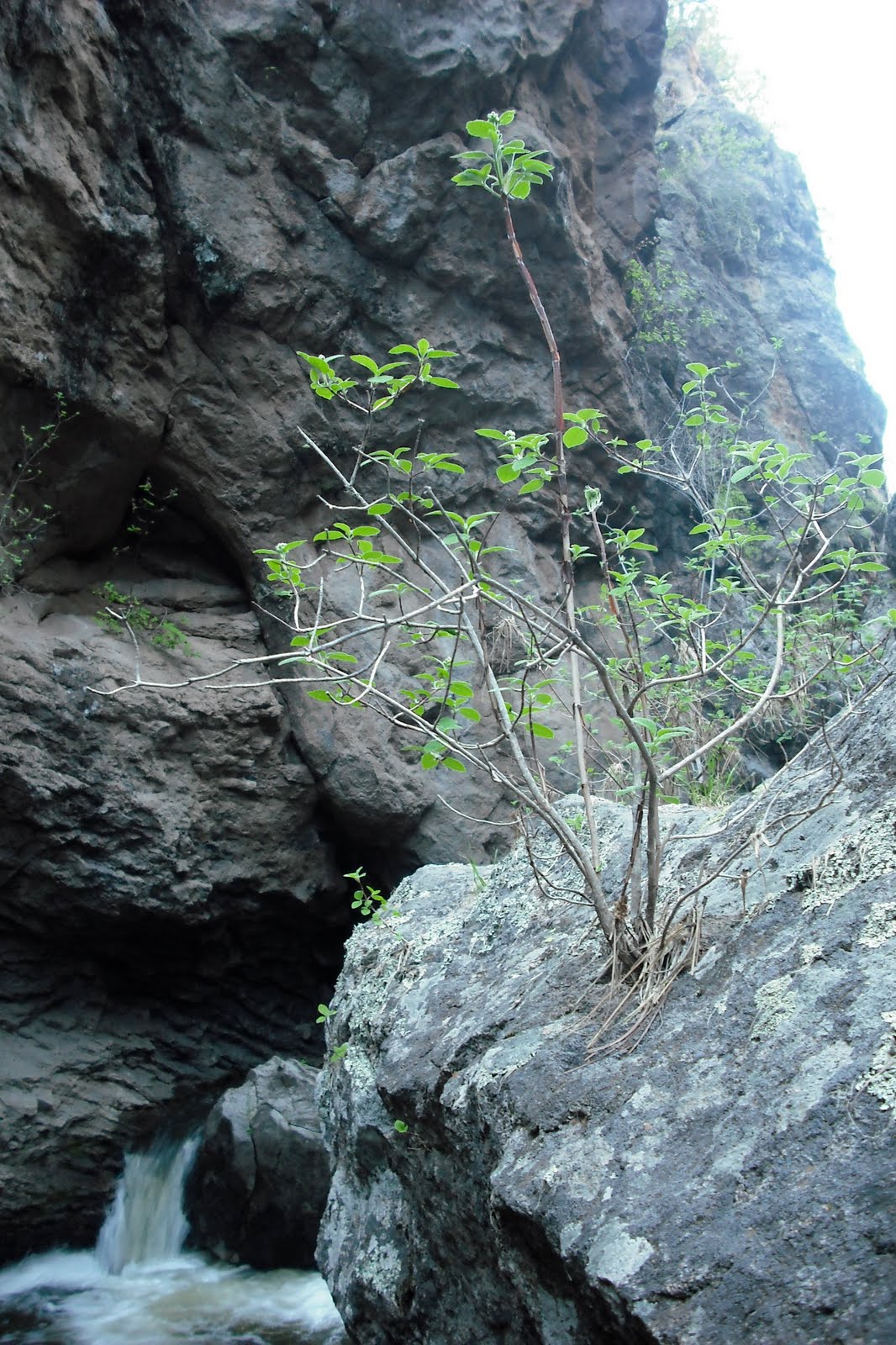
As I made my way up to the Jemez mountains I watched the temperature drop to 85. I set up camp in a National Forest campground and as the sun set, I fished for a couple of hours on the East Fork Jemez River. I spooked more fish than I caught, but manged to land a few small ones (10 inches). Where I fished it, the river was a series of plunge pools like the one shown below. On all sides of the river were steep rock walls and so to fish the river I needed to stay in the river and walk up. Which is why I spooked so many fish.


Pocket water on East Fork Jemez
A plunge pool on the East Fork Jemez


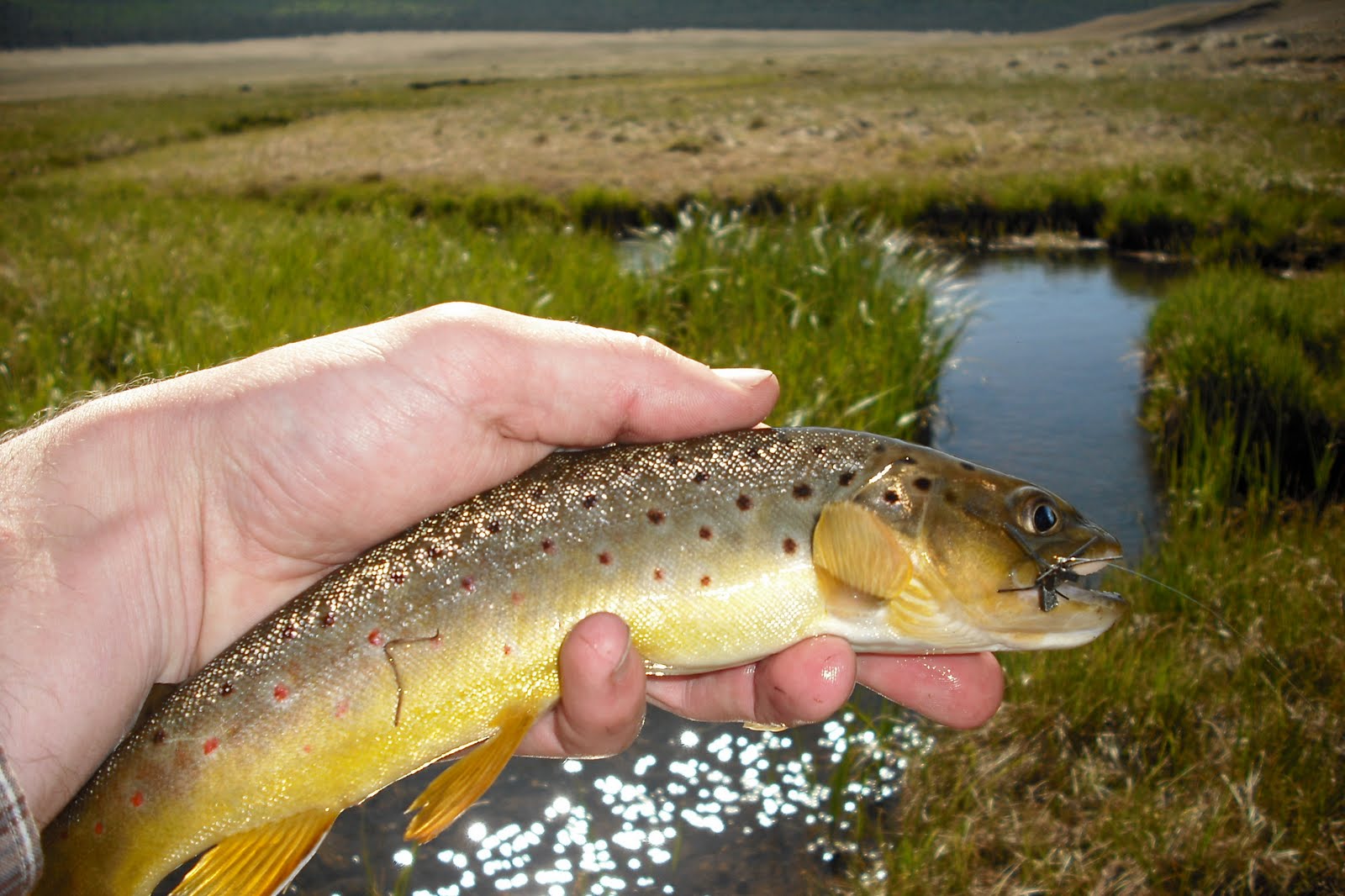
On Saturday, I made my way over to Valles Caldera Preserve, registered, and took my designated place on the water. The fishing was interesting. I actually think it was more like golf than fishing. The water was small and the wind was up, which made casting difficult. But if I could get my fly on the water, I'd catch a fish about 6 or 7 times out of 10. I used foam beetles and hoppers and never needed to put on a nymph or streamer. All the fish were small, less than 10 inches, but really fat for 8 and 10 inch fish. I doubt that anything larger lived in this water, but I could be mistaken. I rate my experience at Valles Caldera very high. I went there so I wouldn't have to put up with a lot of people and that paid off as I drove past fishing parking lots outside of the park that were jam-packed. I saw some elk which is a big deal for someone as interested in ungulates as I. I caught a ton of fish on dry flies, practiced my casting, and did it all in a beatifull environment.
A typical San Antonio Creek brown, 8 inches of chunky fish.
A brown with San Antonio Creek in the background. The stream is really narrow and difficult to place a fly. Challenging but very rewarding.
. Another section of San Antonio Creek, this one a bit wider and easier to fish.

Elkhorn River, June 11


Each year in June I meet up with my brothers, dad, buddies and local river rats for a weekend of catfishing. This year we set a date and made the trip despite a forecast for high water. Wow, I didn't anticipate the river being this high. We managed to set lines in some flood waters, however, didn't hook into any cats. We spend a good portion of the weekend watching trees float down the river, pretty impressive. On Friday night our tent and tarp shelter, which we were proud of, was flattened in a mini-hurricane.

Thursday, June 3, 2010

Valles Caldera


I'm off to Santa Fe for some work and fishing. With any luck I'll make it back without out any Cormac McCarthy like incidents-you know, being in the SW and all. I'll be camping in the Jemez Mountains http://en.wikipedia.org/wiki/Jemez_Mountains. I will be trout fishing for a couple of days among lava domes in Valles Caldera National Preserve http://www.vallescaldera.gov/ http://en.wikipedia.org/wiki/Valles_Caldera_National_Preserve -Note the several western films that were shot at Valles Caldera.

I'll be fishing on San Antonio Creek http://www.vallescaldera.gov/comevisit/fish/SanAntonio.aspx The preserve has very strict rules about fishing in the park, mainly to insure that you don't encounter a whole lot of people http://www.vallescaldera.gov/comevisit/fish/FishingTips.pdf. I'm fishing reach 1 on the far East of this map http://www.vallescaldera.gov/about/maps/static/fishing2009.pdf. Note the five domes just to the south of the river. Those are old lava domes. I can't wait. I have a box full of hoppers, ants, and beetles-which I've been told is all I'll need.

Wednesday, June 2, 2010

gar

I finally purchased a new battery charger for my camera and retrieved this photo. Not a great photo. Nevertheless, it is in fact a gar, caught on a rope fly (shown with black and pearl flash).

Monday, May 24, 2010

Friday's Freakshow

Friday was one of those evenings when everything worked in my favor. After several days of blue skies, Friday was overcast and rainy all day long. I fished from 4 to 8 pm and fish were rising as soon as I hit the water. They looked to be taking blue-winged olives and I caught a number of fish from two different runs on BWO patterns. Later I saw a couple of sulpher-like bugs in the air and switched over to a #16 sulpher pattern. At that point fishing picked up even more. I finished the night off taking a couple of fish on streamers. It was a great day, following all the bluebird days earlier in the week, all conditions favored the angler on Friday and I was lucky enough to take advantage.

Thursday, May 20, 2010

Searching for the happy angler

I'm searching for the happy angler that lives inside of me. Been out on the black a couple of nights this week. The wate is up from the recent rains, which makes it harder to find fish. The gar haven't been rolling as much as they were. Not sure why-maybe the higher water.

Went trout fishing this morning for a few hours before work. -got a couple to hit on terrestrials. Its early, but by far one of my favorite ways to catch trout. Taking Jr out tomorrow.

downstream on the Black
upstream

upstream.


gar fly


Monday, May 17, 2010

The listless angler

To read this piece, you will need the following definitions:
1) The Happy Angler: One who is single-mindedly focused on fishing. Not reading about fishing, not philosophizing about fishing, not purchasing gear, not developing new fly patterns, but instead being on the water with whatever ideas and gear one has.
2) The Philosophical Angler: One who spends a good deal of time reading about fishing, reviewing gear and other fishing related products, researching fly patterns and places to fish, etc...
3) The Listless Angler: One who has little interest in fishing or thinking about fishing, but one who is still, deep-down, an angler.

Figures 1 and 2: The ratio of time I typically spend fishing and thinking about fishing and correspondance with the three attitudes defined above.


I typically alternate through these three attitudes toward fishing during the calendar year reflecting the ratio of time I spend fishing to thinking about fishing (Figs 1 and 2). Each attitude has positive and negative attributes, even listlessness. I'll start with winter. Strangely, I am not listless during the winter period, despite weather permitting very few fishing opportunities. I (and I think most other's) spend the winter researching the where's, what's and who's about fishing. In comparison to my listless periods of fishing, I actually spend a good deal of time on the water, but not enough to be a Happy Angler. I hate this period of time and the attitudes I develop during it. It is during this time that I develop strong opinions about the way I and others fish, opinions I will later dismantle during my Happy Angler phase. In short, too much reading and thinking about fishing and only small doses of actual fishing make for a well-educated, highly opinioned, jerk of a fisherman. I know people who never make it out of this phase.

Late winter/early spring brings about a period of time when gear, method, and who is doing what loose all significance. It is during this time of year that I become so obsessed with being on the water that I no longer care about anything else. The Happy Angler is Opie Taylor on his way to the local fishing hole. This is a magical time for me. I will again be the Happy Angler in July, after finishing up a short (and strangely out of place) stint of listlessness and again during the fall when I realize that my fishing days are numbered by the oncoming winter.

I am a listless angler right now and am for most years during late May and early June. Saturday morning I was to head out fishing at 5:30 am. Instead, I slept in, made breakfast for the family and worked on the house and played with the kids. By mid-May I'm typically finishing up my Happy Angler period and have been on a fishing bender of sorts. I just can't keep up the pace. Combine this with the nice weather and urge to accomplish house projects and what you get is a listless angler. I don't mind this time period. I can honestly say that I care little for fishing at this time, which preserves relationships with others. But why should I go through this attitude at a time when the fishing is so good? I suppose it has to do with the time spent during the previous few months as a Happy Angler. Also, the streams start to get crowded in late spring, which eats away at a Happy Angler and starts to break him down. Fear not however, because the Happy Angler will return in July as a response to the Listless Angler. And he/she will have banked some family leave hours from all that house work and family time.

July is a strange time to get back into fishing because the trouting is not that great. Terrestrials are out and about, which makes for some fun top-water fishing. But the big trout seem to turn nocturnal and I've never been much of a nighttime fisher. Because the fishing isn't great, the Happy Angler isn't around for long during the summer. But the Happy Angler returns in fall when the fishing days are numbered.

Theoretically there is a ratio between how much time one spends fishing and how much time one spends thinking about fishing that determines how interested one is in gear and how opinionated one gets regarding method. For me, that ratio is somewhere around 50%. Where is it for you? Are you OK with that?

Monday, May 3, 2010

Shorthead Redhorse

Some good stuff about the Redhorse sucker from Craig Springer, contents from Chicago Wilderness Mag

When the river redhorse turns its energies to spawning, all of its fins turn a brilliant, bright red (they can be at least partially red the rest of the year). The redhorse also develops pearl organs, or tubercles, on its skin around this time. These organs give the skin the coarse, raspy texture needed for spawning. The adults make runs upstream, moving mostly at night to find good breeding habitat. Most suckers seek out rocky riffles in the shallow water of small streams, but some local biologists believe some river redhorse may actually be breeding in larger river mainstems in Chicago Wilderness. The males move onto the riffles and either excavate gravel with their tails in a sweeping motion or plow through it with their heads, all in an effort to free up silt so oxygen-rich waters can percolate through the gravel where the eggs will incubate.
Facing into the current, males lie in wait for females. When one approaches, the male shows his worthiness, darting back and forth in a sweeping courtship dance. Ripe females are attended in the spawning act by one, sometimes two, males. The pearl organs allow the male and female to cling together and maintain a station over the excavation while the eggs — upwards of 50,000 of them — are simultaneously fertilized and dropped among the clean gravels.
The parents promptly abandon the area and head back downstream, but soon swarms of newly hatched fish take temporary station in the slow-moving shallows. Here they provide food for predatory fishes, such as black bass and sunfish. Herons, too, eat the smaller fish. Those lucky enough to move into deeper waters could reach two feet long and eight pounds at the end of their 12-year lifespan.
In Illinois, the river redhorse is protected as a threatened species. Though biologists have found the fish in stretches of the Fox, Des Plaines, DuPage, and Kankakee Rivers, pollution and sedimentation from agriculture and urbanization compromise many of the clean spawning gravels the fish needs and reduce populations of the filter-feeding animals it depends on for food. For these reasons, scientists now treat the sensitive redhorse as an indicator species to show where river conditions have declined or improved. – C. Springer

Wednesday, April 28, 2010

More caddis

Took Jr. out last night to hit the caddis hatch in SE MN. About 30 pounds on my back for a few hours and miles and I'm sore today. I'm sans camera these days as the charger is lost and battery dead. Caddis were popping pretty good and the fish were responding to them and my offerings. No big fish on dries. The largest was probably 11 inches. I switched over to streamers and probed a couple of places I've taken big fish before. I got two fish that went about 14 inches or so and took them home to feed the family. My three-year old daughter goes nuts when I bring fish home, something primitive about it. All apologies to my fishing brethren who would have liked to have caught those two fish in the future. They are dead, but their nutrients and energy now reside in the bodies of two little kids and who knows what additional cosmic elements, which we cannot measure, now also live in the bodies of those kids.

On my camera is a photo (I think) of a short-nosed gar I caught last weekend (~30 inches) on a 5 inch long rope fly. I've been hitting the Black River exclusively for gar the last few weeks for 1-2 hours at a time. The carp are in the backwaters spawning. You can hear and see them from the house-some big-uns down there. One of these days I'll land a truly large gar (~4-5 feet) and capture it on camera. Until then, I'm not going to post much about gar fishing. -Just know that I'm out there, putting my time in, figuring them out little by little. There are some true beasts rolling around in the soft back eddy, presentation seems to be everything, it just takes one, it just takes one.....

Monday, April 26, 2010

Wednesday, April 21, 2010

Carp! It's that time of year.

Having fished the stream last Sunday I knew the quilback and redhorse were pooled up. It's gonna rain this weekend so I wanted to fish before the streams go dirty. My closest streams meander through Iowa's corn fields, a little rain quickly muddies the water. I don't catch much in muddy creeks. Check out this nice bender. From below I target the rock bank and the snag.

The rootball motel. Usually housing a couple smallies. Today, the carp had it booked.

Carp are picky eaters. I heard from the man Barry Reynolds that carp don't like flashy flies. I took em on wet flies and midges -- using flies with no flash was key. Top two wet flies were best producers.
Redhorse pictured above.

Monday, April 19, 2010

80-20

Been busy fishing and fathering-will report soon. Caddis are out.

For now, enjoy this topic (The 80-20 rule) and consider the implications for your life, work, and hobbies, etc...

http://en.wikipedia.org/wiki/80-20_rule

4_18_Outing

We've finally had enough of a dry spell to clear up the creeks.

It's fun seeing what changes result from the Spring high waters. New smally hideouts on this stream.

The carp are marching up the creeks. I walked through some thick pools of quilback and redhorse. I should have spent more time fishing for these guys but I didn't have much time to fish and I wanted to scope out the rest of my stream. I stood on a big slab of limestone with water 1 ft deep and pretty good current while a school of carp marched single file right under my nose. I should have taken out my phone and shot some video, it was pretty cool.
Took a couple smallies from this sharp bend, on the rocks. The bite is very subtle this time of year. Lots of short strikes.

Monday, March 29, 2010

3/26-27/2010 outing

Uncle Johnny Rotten (UJR) and I spent the weekend down in Grant Co. looking for some big browns and Blue-Winged Olives.
John spent the weekend fishing streamers in search of big fish. It paid off with this 21" brown on Friday, just before dark. Look at the shoulders on that fish, impressive. Although John was pumped about landing it, his immediate response was that smallmouth half the size fight twice as hard.
We fished a couple of different streams and within those streams a couple of different types of water, from wooded to open and big to small. We took a few fish from the run above, which was at the transition from wooded to more open stream.

As usual, I fished dry flies probably more than I should have. On Friday it was BWO's and on Sat it was midges (different streams and perhaps different weather conditions). The fish above was one of a number small fish taken during the midge hatch on Sat. I had to leave during the middle of the hatch ~3:00 :(

I took this fish on Friday during the BWO hatch. Just when I was thinking of putting the dries away, this fatty rainbow rose to my cripple.

A couple of runs later I took this 14-15 inch brown (long and skinny).

John, hooked in.

My stripping finger after two days of non-stop fishing. Time to redevelop the callouses.
Check out UJR's pic's here: http://flyfishingwarmwater.blogspot.com/


Sunday, March 28, 2010

3/26 Weekend in WI

Small trout streams in Grant County WI.
Good Company.Venison cheddar brats, buffalo burgers, and more venison cheddar brats. (not pictured)
Nate taking em on dries.
The pig.
I love big fish from small streams.
This guy was sitting just below the riffle.

Wednesday, March 17, 2010

3-16-2010 Outing

Fished yesterday afternoon/evening for a couple of hours in La Crosse County after work. I didn't anticipate fishing and so didn't bring the camera along (again). I started out fishing nymphs under an indicator because that was how my rod was rigged up when I finished fishing on Saturday. I landed a number of small fish this way, and one 15-16" fish which looked very similar to the fish shown below that I landed on Saturday. Sorry for the rod/fish photo (unappealing, I know) but fishing alone stinks for photos.
I saw a handful of midges, but no fish rising. I also noted a couple of fairly large (#12-14) stoneflies in the air. After two fish came up and tried to eat my indicator I put the damn thing away. There is nothing like meticulously constructing flies and then having a fish try to eat your florescent bobber to make you wonder just who you are trying to impress. Taking the stoneflies in the air into account, and the attempts at my indicator, I put on a #12 caddis dry-fly and took a small fish on the first cast. Sweet. I fished that fly through a couple of runs without another strike and then switched over to streamers. I landed another 15-16" brown on a streamer and a handful of smaller fish.

In the last two outings to this little creek, I've landed almost exclusively fish under 10 inches, with three fish over 15 inches. There may be larger fish in this creek, but there seems to be a real lack of fish in the 10-15 inch range. The data shown below are quite dated, from Thorn and Anderson (1993, MNDNR Invst. Report 428) but still shows approximate length at age for brown trout from MN, Michigan, and the American West. You will have to add an inch or two to the fish I've been catching, since they are from Wisconsin and everything is a little bigger in Wisco. Am I right?
At any rate, a 15 inch brown will be starting its 5 or 6th year right now. -Which humbles me when I consider that this is a wild trout stream. These fish were born in this very stream 5 years ago, and have persisted through two incredible floods during their lifetime. I wonder if these floods did a number on the age 2-4 year old fish, as these fish would have been just born during the 2008 flood. I have yet to land a fish in this age-class in this stream. I suppose I'll have to keep fishing it to find out.

In March of 2009 I made a few visits to my local streams and found the streams full of suckers and chubs. This wasn't a disappointment as I relish the opportunity to hook into a quilback, redhourse, or any member of the carp family. I didn't hook into smallies until the first week in April. Adult smallmouth migrate to larger waters downstream to spend the cold season. Some of those deeper pools were piled up with smallmouth in early April. The junction points where creek meets the larger river held the most fish, while the upper sections of the streams held fewer fish early in the season. A study performed by the IDNR reported radio-tagged smallmouth around Elkader migrated 35 miles downstream to the Mississippi in the fall and returned the following spring.

This female recently dropped a belly of eggs. She had no fight in her. Like hooking a wet sock.

Tuesday, March 16, 2010

1st of 2010

A couple weeks ago I fished a nice stream, Catfish Creek. Lots of work has gone into this watershed since 2007. This plump rainbow was tasty on some tortilla chips.


In a couple weeks my backyard streams will be stacked with carp! A few more weeks and my backyard streams will be stacked with smallies!

Warmwater fly fishing

During a ski with Uncle Johnny Rotten (UJR) in Feb. 2009, we were discussing some of the finer things in life, such as the various species of fish that can be caught with a fly. The conversation somehow drifted to a friendly wager: to the guy who can catch more species of warmwater fish on a fly goes a pizza and beer.

A blog was then developed (http://flyfishingwarmwater.blogspot.com/) which at the time was called "Warmwater fly provocation", where we posted the various species that we caught during the 2009 season. In the end, we both learned that there are specific types of rivers and species that we love to spend our time on, and there are others that we don't like that much. The problem with the competition became that in order to try and get a walleye on a fly, we had to go and fish water and use techniques that we didn't much care for. Nevertheless, it was fun, UJR beat me by one species, a quillback; a species he is now gearing up to target during their spring spawning run.

UJR also found some absolutely awesome small streams that hold big smallmouth. He is now transforming the blog above into a site devoted to catching various warmwater species in Eastern Iowa, with smallies as the main species.

Our friendly competition helped John learn something that he probably would have learned anyhow, only perhaps more quickly. That is, he learned that streams he was driving over on his way to trout fish, held some bigger and funner fish, smallmouth. Many of the small creeks in Eastern Iowa were historically probably full of trout, but are now too warm. But they still hold good populations of smallmouth and various carps. This is information that people need to know, because healthy fisheries don't just happen. In fact, the more people fish in an area, the more money goes to that area to improve fishing, and then things start to snowball.

Thanks to the National Fish Habitat Action Plan: (http://www.fishhabitat.org/) folks like us can learn more about our local fisheries and what we can do to improve them. In this area, we are lucky to have two partnerships, the driftless area restoration effort:

http://www.fishhabitat.org/index.php?option=com_content&view=article&id=103:driftless-restoration&catid=44:partner-profiles&Itemid=37

which focuses on trout streams in the driftless area. And the Fisher's and Farmer's partnership:

http://fishersandfarmers.org/

which focuses on those other streams that most of us drive over on our way to the driftless area, but which UJR finds big smallies in. If you fish, please support these groups, either financially, or by volunteering. And stay tuned to UJR's website for some sweet warmwater action.